
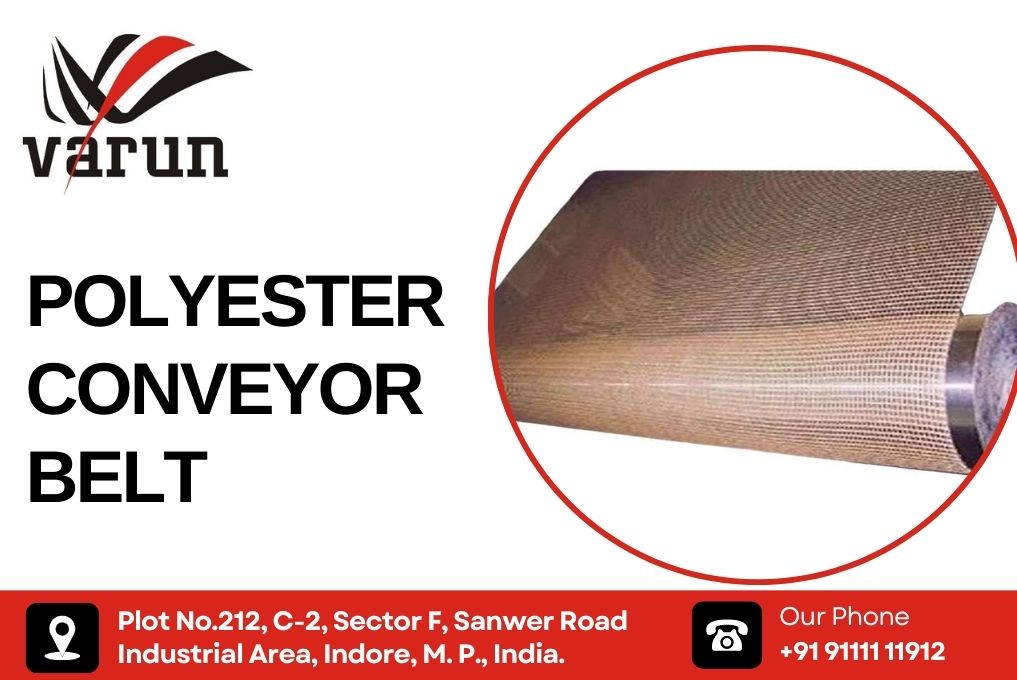
Polyester Conveyor Supplier in MP, India – Varun Tex Inc.
Reliable Polyester Conveyor Solutions for Industrial Material Handling and Manufacturing Applications
Skillful material handling is an essential part of modern industrial operations. From manufacturing units and packaging facilities to warehouses, processing plants, and other industrial environments, conveyor systems help move materials from one production stage to another with greater consistency and operational convenience.
The performance of a conveyor system depends on many factors, including belt material, construction, load requirements, operating conditions, and suitability for the application. Polyester conveyor belts are widely used in various industries because polyester-based reinforcement can provide dimensional stability, tensile strength, and resistance to stretching under the right operating conditions.
Varun Tex Inc. is a leading polyester conveyor supplier in MP, India, for businesses seeking conveyor belt solutions for industrial applications. Companies planning to purchase polyester conveyor belts should consider the required belt specifications, working environment, material characteristics, and compatibility with their existing conveyor equipment. Whether you operate a manufacturing facility, packaging unit, warehouse, or material handling plant, choosing the right polyester conveyor belt can ensure smooth movement of materials and help maintain production efficiency.
If you are looking for a polyester conveyor supplier in Madhya Pradesh, India, contact Varun Tex Inc. to inquire about the right polyester conveyor solution for your industrial needs.
What is a polyester conveyor belt?
A polyester conveyor belt is a type of industrial conveyor belt that uses polyester-based fabric reinforcement as part of its construction. It is designed to move materials from one place to another in industrial and commercial operations.
Polyester is commonly used in conveyor belt reinforcement because of its beneficial mechanical properties, such as tensile strength, dimensional stability, and relatively low elongation under proper operating conditions.
Depending on the belt design, a polyester conveyor belt may include:
* Polyester fabric reinforcement.
* Multiple fabric plies depending on the construction.
* Rubber or polymer-based cover material depending on the product.
* Surface finishes selected for the specific application.
* The correct belt edges and jointing method for the conveyor system.
Constructions vary depending on the manufacturer and intended use.
Polyester conveyor belts are available in various specifications to meet the material handling requirements of different industries.
Why are polyester conveyor belts used in industry?
Conveyor belts play a vital role in reducing manual material handling and supporting organized production processes.
Polyester conveyor belts are chosen for industrial use because they offer strength and are suitable for various conveyor configurations.
Some important characteristics include:
1. Good Tensile Strength
The strength of polyester fabric is designed to withstand the tensile forces generated during conveyor operation. The correct belt strength depends on its composition, fabric quality, and rated specifications.
2. Low Stretch
The strength of polyester generally allows for very low stretch under working stress. This characteristic can help maintain belt size and support stable conveyor operation if the belt is selected and installed correctly.
3. Dimensional Stability
Dimensional stability is essential for maintaining consistent belt performance. Polyester reinforcement can help reduce excessive stretch under appropriate operating conditions.
4. Suitable for Industrial Applications
Polyester conveyor belts are used in a variety of material handling systems. The correct belt construction depends on the material being transported, operating speed, load, and environmental conditions.
5. Compatibility with Different Conveyor Systems
Polyester conveyor belts can be designed for different conveyor configurations and industrial applications. Belt width, thickness, ply construction, and surface characteristics should be selected according to the equipment requirements.
6. Support for Continuous Material Movement
A properly selected and maintained conveyor belt can support organized material transportation during production and processing operations.
7. Flexible Specification Options
Polyester conveyor belts can be available in different widths, thicknesses, strengths, and surface constructions, depending on the supplier's product range.
Uses of Polyester Conveyor Belts
Polyester conveyor belts are used in various industries where materials need to be transported between different production, processing, storage, or packaging stages.
The correct belt specification depends on the material type, load, temperature, conveyor design, and operating environment.
1. Manufacturing Industry
Manufacturing facilities use conveyor systems to move raw materials, semi-finished products, and finished goods between different production stages.
Polyester-reinforced conveyor belts are ideal for general material handling.
2. Packaging Industry
Packaging units use conveyor belts to move products through filling, sealing, inspection, sorting, and packing operations.
The right conveyor belts can help maintain a consistent flow of material within packaging lines.
3. Warehousing and Logistics
Warehouses and distribution centers use conveyor systems to move cartons, packages, and other goods between receiving, sorting, storage, and dispatch areas. Package size, weight, conveyor speed, and surface requirements should be considered when selecting a belt.
4. Textile Industry
Textile manufacturing and processing facilities use material handling systems to transport textile-related materials between different operational stages.
The appropriate conveyor belt construction can be selected based on the nature of the material and equipment design.
5. Food Processing Industry
Some conveyor belt constructions may be suitable for food-processing environments, depending on the material's food-contact compliance, hygiene requirements, temperature range, and cleaning compatibility.
For food applications, buyers should specifically verify relevant food-grade certification and manufacturer documentation, rather than assuming that every polyester conveyor belt is suitable.
6. Agricultural Processing
Agricultural processing facilities may use conveyor systems to transport appropriate raw materials and processed products during grading, sorting, cleaning, and packaging.
The surface and construction of the belt should be selected based on the material being transported and the operating conditions.
7. Pharmaceutical and Chemical Industries
Some industrial processing and packaging operations in pharmaceutical and chemical facilities use conveyor systems for material transportation. For these applications, chemical compatibility, hygiene standards, contamination control, and applicable industry requirements should be carefully examined.
8. Automobile and Engineering Industry
Automotive and engineering facilities use conveyors to move components, assemblies, and industrial materials through various production stages.
The required belt strength, dimensions, surface properties, and operating specifications depend on the conveyor design and material load.
Key Considerations When Selecting a Polyester Conveyor Belt
Selecting the right conveyor belt is essential for maintaining reliable material handling operations. Businesses should consider these factors before purchasing a polyester conveyor belt.
1. Belt Tensile Strength
Tensile strength indicates the belt's ability to withstand pulling forces during operation.
The required strength depends on the conveyor length, load, operating tension, belt construction, and system design.
2. Number of Fabric Plies
Some conveyor belts use multiple layers of fabric reinforcement. The number of plies and fabric construction affect the belt's mechanical properties and suitability for a specific application. 3. Belt Width
The belt width should match the conveyor structure and material handling requirements.
Choosing the correct width ensures smooth material movement and minimizes compatibility issues during installation.
4. Belt Thickness
The required thickness depends on the belt's design, operating conditions, and application.
Buyers should confirm the overall thickness and cover thickness, where applicable, before placing an order.
5. Surface Material and Finish
The surface material of a belt plays a crucial role in transportation.
Depending on the application, buyers may require:
* Smooth surfaces.
* Textured surfaces.
* Rubber-coated surfaces.
* Special surface finishes.
Exact options depend on the supplier's available product range.
6. Operating Temperature
Temperature conditions can affect belt performance.
For applications involving hot materials or high ambient temperatures, confirm the manufacturer's stated operating temperature range.
7. Chemical and Moisture Protection
In industrial environments, conveyor belts may be exposed to moisture, oils, chemicals, cleaning agents, or other contaminants.
The belt material and cover design should be appropriate for the actual working environment.
8. Conveyor Speed and Load Capacity
Conveyor speed and transported load impact belt selection.
Accurate operating details should be provided to help the supplier identify the right product specifications.
Why choose Varun Tex Inc. as a polyester conveyor supplier in Madhya Pradesh, India?
Finding the right supplier is a crucial step for businesses that rely on conveyor systems for regular material movement.
Industrial buyers looking for polyester conveyor belt solutions in Madhya Pradesh, India, can contact Varun Tex Inc.
When considering Varun Tex Inc. for their conveyor belt needs, customers should consider:
Application-Based Product Selection
Different industries have different material handling requirements. Buyers should share their application details to identify the right conveyor belt construction.
Industrial Material Handling Needs
When selecting a conveyor belt, consider load, operating conditions, belt size, and equipment compatibility.
Product Specification Guidance
Understanding the technical specifications of belts can help businesses make informed purchasing decisions. Customized Inquiries
Industrial customers can discuss their required belt width, thickness, strength, design, and application before requesting a quote.
Support for Industrial Buyers
Businesses can inquire about the right polyester conveyor options for manufacturing, packaging, processing, and other material handling operations.
Meeting Industrial Needs in Madhya Pradesh
Companies across Madhya Pradesh can inquire about product availability, supply arrangements, and delivery options based on their location and order requirements.
To enhance website credibility, include Varun Tex Inc.'s verified product range, manufacturing or distribution status, available specifications, years of experience, supply locations, and customer references. Do not claim manufacturing capabilities or technical certifications unless documented.
Benefits of Using the Right Polyester Conveyor Belt
Selecting a conveyor belt that matches the industrial application can improve equipment performance.
Improved Material Handling
A suitable conveyor belt helps move materials systematically through different operational stages. Improved Operational Consistency
Selecting and installing the right belt can support consistent conveyor movement under specified operating conditions.
Reducing Unnecessary Belt Stress
Selecting the right belt construction for expected loads and operating conditions can help reduce excessive stress.
Right for Different Industrial Setups
Polyester-reinforced belts are available in different constructions to meet different material handling requirements.
Support for Production Flow
Conveyor systems help reduce repetitive manual material movement and support organized industrial processes.
Improved Equipment Compatibility
Selecting the correct belt dimensions and specifications helps ensure compatibility with existing conveyor systems.
Frequently Asked Questions (FAQs)
1. What is a polyester conveyor belt?
A polyester conveyor belt is an industrial belt that uses polyester fabric reinforcement to provide tensile strength and dimensional stability. It is used in various industries with appropriate material handling systems.
2. Who is a polyester conveyor supplier in Madhya Pradesh, India?
For inquiries regarding polyester conveyor belt needs in Madhya Pradesh, India, contact Varun Tex Inc. Buyers should confirm available products, specifications, supply locations, and delivery arrangements directly with the company.
3. What are the key advantages of polyester conveyor belts?
Polyester conveyor belts have good tensile strength, relatively short elongation, dimensional stability, and are suitable for various industrial material handling applications, depending on their design.
4. Where are polyester conveyor belts used?
They can be used in manufacturing, packaging, warehousing, textile processing, agricultural processing, and other industrial material handling operations.
5. How do I choose the right polyester conveyor belt?
Consider the required belt width, length, thickness, tensile strength, fabric composition, operating temperature, conveyor speed, load, and material being transported.
6. Are polyester conveyor belts suitable for heavy-duty applications?
Some polyester-reinforced conveyor belts are designed for difficult industrial applications. However, suitability depends on the belt's rated tensile strength, design, operating conditions, and conveyor design.
7. What is the difference between polyester and nylon conveyor belts?
Polyester reinforcement generally offers low stretch and good dimensional stability, while nylon reinforcement is known for its flexibility and impact-related properties. The correct choice depends on the application and manufacturer's specifications.
8. Are polyester conveyor belts suitable for the packaging industry?
Yes, the correct polyester-reinforced conveyor belt construction can be used in packaging and material transportation systems. The belt surface, dimensions, and operating specifications must match the packaging equipment.
9. Can polyester conveyor belts be customized?
Customization may be available depending on the supplier's product range. Buyers should inquire about the width, thickness, length, construction, and other technical requirements of available belts.
10. How can I determine the required tensile strength of a conveyor belt?
The required tensile strength depends on the conveyor length, transported load, belt tension, operating speed, and system design. It should be determined using equipment specifications and appropriate engineering calculations.
Polyester Conveyor Supplier in MP India
Polyester Conveyor Belt Supplier in Madhya Pradesh
Polyester Conveyor Belt Supplier in India
Polyester Conveyor Belt in MP
Industrial Conveyor Belt Supplier in MP
Polyester Conveyor Manufacturer in India
Polyester Conveyor Belt Dealers in MP
Industrial Polyester Conveyor Belts
Polyester Fabric Conveyor Belt
Industrial Conveyor Belt Solutions
Conveyor Belt for Manufacturing Industry
Conveyor Belt for Packaging Industry
Material Handling Conveyor Belts
Polyester Reinforced Conveyor Belt
Industrial Conveyor Belt Supplier
Polyester Conveyor Belt Distributor
Heavy Duty Polyester Conveyor Belt
| Tags: | #Polyester Conveyor Supplier in MP India |


